
In Riyadh’s fast growing healthcare ecosystem, accurate medical document translation is more than a convenience it is critical to patient safety, legal compliance, and smooth coordination between hospitals, insurers, and patients. Whether you are an expatriate receiving care in a Saudi hospital, a Saudi patient seeking treatment abroad, or a healthcare provider managing international patients, choosing the right partner for medical document translation Riyadh can directly impact diagnosis, treatment, and reimbursement.
This cluster guide dives deep into the specifics of medical document translation from discharge notes and lab results to prescriptions and insurance files and explains how a certified provider in Riyadh can help you avoid costly or dangerous misunderstandings.
For a broader look at legally accepted translations, pricing, and processes for all types of documents in Saudi Arabia, see our main guide: Complete overview: “Certified Translation Riyadh: The Complete Guide to Legally Accepted Documents, Costs, and Processes.”
Why Medical Document Translation Riyadh Is So Critical
Riyadh hosts some of Saudi Arabia’s leading hospitals, clinics, and medical research centers. Many of them serve a diverse population: local patients, Gulf nationals, international visitors, and a large expatriate community. In this environment, language gaps are inevitable and risky.
Unlike general content, medical documents contain highly technical language and sensitive health information. Errors in translation can lead to:
- Incorrect dosage or medication due to misinterpreted prescription translation Riyadh
- Misdiagnosis when test values or terms in lab result translation Riyadh are misunderstood
- Treatment delays because overseas doctors cannot fully understand the discharge summary translation Riyadh provided by a local hospital
- Insurance claim rejections when supporting medical and insurance document translation Riyadh are incomplete or inaccurate
This is why Riyadh hospitals, insurers, and patients increasingly rely on professional, certified translation providers like C-KAT Translations and Interpretations, who understand both medical terminology and Saudi regulatory expectations.
Key Types of Medical Documents That Require Professional Translation

Not all medical documents carry the same level of risk, but many are essential to safe and continuous care. Below are the most common document types requested for medical document translation Riyadh.
1. Hospital Record Translation in Riyadh
Hospital record translation Riyadh covers the full spectrum of a patient’s medical history at a facility. Typical contents include:
- Admission notes and triage reports
- Inpatient progress notes and nursing notes
- Surgical and operative reports
- Anesthesia records
- Radiology and imaging reports (X‑ray, CT, MRI, ultrasound)
- Consultation notes from specialists
These records are often required when:
- Seeking a second opinion abroad
- Transferring to another hospital within or outside Saudi Arabia
- Filing health or life insurance claims
- Preparing legal reports after accidents or malpractice claims
2. Discharge Summary Translation Riyadh
The discharge summary is a concise but critical document that describes what happened during a hospital stay and what should happen next. Accurate discharge summary translation Riyadh ensures continuity of care when the patient moves between providers or countries.
A typical discharge summary includes:
- Final diagnosis and comorbidities
- Procedures performed and key findings
- Medications on discharge (names, dosages, duration)
- Follow‑up recommendations and scheduled appointments
- Warning signs that require urgent medical attention
Any ambiguity in these sections can lead to conflicting treatments, duplicated investigations, or missed red flag symptoms.
3. Lab Result Translation Riyadh
Lab result translation Riyadh seems straightforward many values look like numbers only but it is one of the most sensitive translation tasks. The translator must understand:
- Medical abbreviations and short forms (e.g., Hb, CRP, ALT)
- Reference ranges, units, and their country‑specific variations
- Interpretive comments written by the pathologist or lab specialist
For example, a blood glucose result could appear in mg/dL or mmol/L depending on the country. A translation mistake that fails to clearly indicate the unit could mislead a foreign doctor about the severity of diabetes control.
4. Prescription Translation Riyadh
Prescription translation Riyadh is crucial when patients obtain medications abroad or when foreign doctors review ongoing treatments. A professional translator must handle:
- Drug names (brand vs generic)
- Dosage and frequency (e.g., “bd”, “tid”, “prn”)
- Routes of administration (oral, IV, IM, subcutaneous, topical)
- Duration of therapy and refill instructions
Local brand names used in Riyadh may not exist in another country. In such cases, the translator should identify and translate to the international nonproprietary name (INN) where appropriate, to avoid substitution errors.
5. Insurance Document Translation Riyadh
Insurers in and outside Saudi Arabia require extensive documentation to process claims. Insurance document translation Riyadh typically includes:
- Medical reports and certificates
- Invoices and itemized bills
- Pre authorization or referral letters
- Disability assessments and work‑fitness reports
Here, consistency is key terminology must match across all translated documents so that claims departments can verify eligibility, medical necessity, and coverage limits quickly.
Why Medical Terminology Accuracy Matters in Riyadh
In medical translation, near correct is not good enough. High‑stakes decisions rely on absolute clarity. This is where medical terminology accuracy Riyadh becomes a core requirement rather than a bonus.
Risks of Inaccurate Medical Terminology
- Clinical risk: A mistranslated allergy (e.g., penicillin vs general antibiotic allergy) could be life‑threatening.
- Legal risk: Misinterpretation of injury severity in a medico‑legal report could affect court decisions or compensation in Saudi Arabia.
- Financial risk: Incorrect wording of treatment dates or procedures can cause claim denials or audits.
How Professional Providers Ensure Terminology Accuracy
Experienced providers such as C-KAT Translations and Interpretations implement multiple layers of quality assurance to protect patients and institutions:
- Subject matter linguists: Translators with experience or training in healthcare, nursing, or pharmaceutical fields.
- Terminology databases: Maintained glossaries for consistent translation of anatomy, lab tests, procedures, and drug names.
- Peer review: Second‑linguist or senior medical reviewer checks for clinical plausibility and consistency.
- Confidentiality protocols: HIPAA style confidentiality practices and NDAs to protect sensitive health information.
Typical Workflow for Medical Document Translation Riyadh
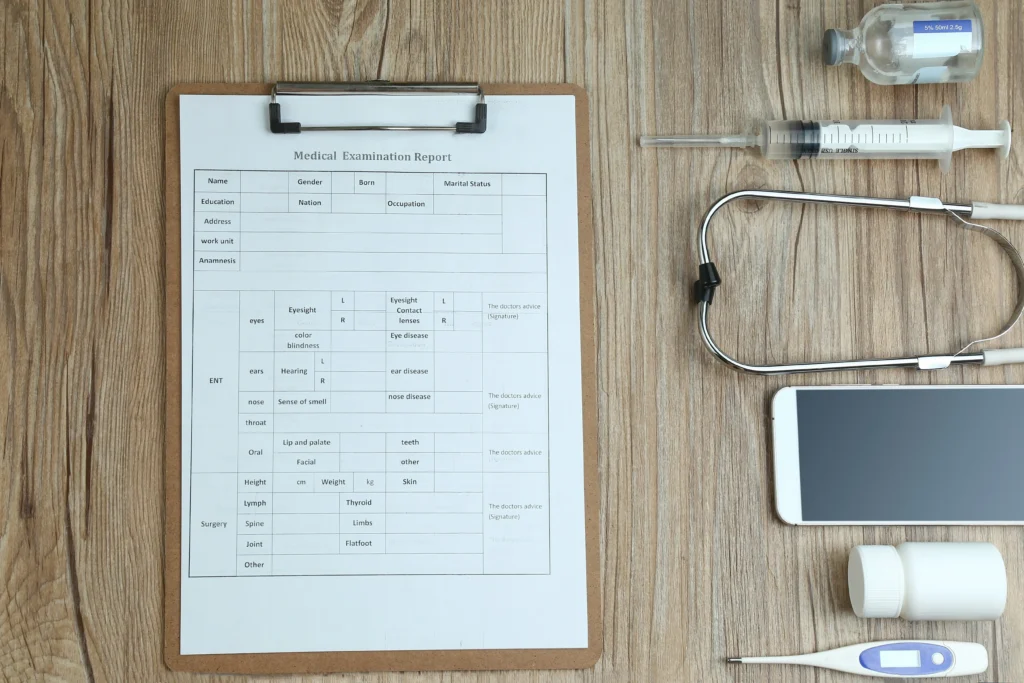
Understanding the process helps both patients and providers set realistic expectations and prepare correct files from the start.
Step‑by‑Step Workflow
- Document reception and assessment
You share clear scans or originals of your medical documents with the translation office. The team confirms language pairs, number of pages, purpose of use (clinical vs legal vs insurance), and any urgent deadlines. - Quotation and timeline
Based on length, complexity, and urgency, you receive a cost estimate and delivery timeframe. Certified translations for medical documents may require additional formatting or attestation. - Assignment to a medical translation specialist
The project manager assigns your file to a translator experienced in the relevant medical field cardiology, oncology, surgery, pediatrics, etc. - Initial translation
The translator renders the text into the target language, applying approved terminology and matching original document structure (tables, headings, codes). - Revision and quality check
A second linguist or reviewer checks terminology, numbers, dates, and formatting, ensuring nothing is omitted or added. - Certification/attestation (if required)
For documents that must be legally recognized (e.g., for visa, court, or certain insurance uses), the translation office prepares certified copies, stamps, and any necessary statements of accuracy. - Delivery and clarification
You receive the final translation in the agreed formats (digital or hard copy). Reputable offices allow a short window for clarification questions or minor adjustments if needed.
How Long Does It Take?
Turnaround time in Riyadh depends on volume and complexity:
- 1 to 3 pages (e.g., discharge summary, lab report): often 1 to 2 business days
- Full hospital record translation Riyadh (50+ pages): can be several days to a couple of weeks
- Urgent or same‑day requests: sometimes possible, but may cost more and depend on translator availability
What Patients in Riyadh Should Prepare Before Requesting Medical Translation
Whether you are planning treatment abroad or submitting documents to an insurer, a little preparation will make the translation smoother and more accurate.
Checklist for Patients
- Collect all relevant documents: discharge notes, lab results, imaging reports, prescriptions, operation notes, and referral letters.
- Ensure legible copies: provide clear scans or photographs; avoid cut‑off edges or blurred handwriting where possible.
- Clarify your target country/doctor: translators can adapt certain conventions (like units of measurement) depending on destination country standards.
- Explain the purpose: second opinion, visa medical, insurance claim, clinical trial registration, etc. This can affect the level of detail or certification required.
- Ask about certified translations: some embassies, foreign hospitals, and insurers only accept translations from recognized providers in Saudi Arabia.
C-KAT Translations and Interpretations works with patients across Riyadh to identify which medical documents are truly needed and ensures they meet destination requirements reducing back‑and‑forth with foreign clinics and insurance companies.
Guidance for Healthcare Providers and Hospitals in Riyadh
Hospitals in Riyadh routinely handle international patients, cross‑border referrals, and medico‑legal requests. Establishing a structured process for medical document translation Riyadh benefits both the institution and its patients.
Best Practices for Hospitals and Clinics
- Standardize document formats: use clear templates for discharge summaries, operative reports, and lab results to simplify translation and reduce ambiguity.
- Use plain, standardized terminology: avoid nonstandard abbreviations or clinic‑specific codes where possible.
- Partner with a certified translation office: sign a service agreement with a trusted provider like C KAT for rapid turnaround and consistent quality.
- Protect patient privacy: ensure your translation provider follows strict confidentiality procedures and complies with Saudi regulations.
- Train staff to identify when translation is necessary: especially for consent forms, discharge instructions, and emergency care for non‑Arabic or non English speakers.
When Interpretation Is Needed Instead of (or in Addition to) Translation
Written document translation is not always enough. In many clinical scenarios, live interpretation is essential:
- Informed consent discussions for surgery or complex procedures
- Family meetings about prognosis or end‑of‑life care
- Multidisciplinary case conferences involving foreign specialists
C-KAT also provides professional medical interpretation services in Riyadh, along with simultaneous interpretation equipment and onsite technical support for medical events, conferences, and seminars.
How Medical Translation Supports Insurance and Legal Processes in Riyadh
Medical documents are often at the center of insurance claims, disability evaluations, and legal disputes. Accurate translation ensures that decision‑makers understand the medical facts clearly.
Insurance Claims and Reimbursements
For both Saudi and international insurers, clarity in insurance document translation Riyadh speeds up case handling. Properly translated documents help:
- Verify diagnosis and treatment timelines
- Confirm that procedures were medically necessary
- Match treatments to policy coverage and exclusions
- Validate disability or work fitness assessments
Medico Legal and Occupational Cases
In legal or occupational health contexts, courts, government entities, and employers may require:
- Certified translations of injury reports after workplace accidents
- Medical evaluations for compensation claims
- Rehabilitation and long term prognosis reports
A Saudi‑based, officially recognized translation office like C-KAT is well positioned to provide translations accepted by authorities, courts, and government institutions across the Kingdom.
Comparing Common Medical Documents and Their Translation Needs
The table below summarizes typical requirements for different medical document types:
| Document Type | Typical Use Case | Need for Certified Translation? | Key Accuracy Focus |
|---|---|---|---|
| Discharge Summary | Continuity of care, second opinion abroad | Often recommended for official or visa use | Diagnosis, procedures, medications, follow‑up |
| Lab Results | Diagnostic evaluation, monitoring chronic disease | Depends on insurer or receiving hospital | Values, units, reference ranges, test names |
| Prescriptions | Medication continuity across borders | Recommended when used for foreign dispensing | Drug names (INN), dose, frequency, route |
| Full Hospital Record | Complex referrals, medico‑legal, comprehensive reviews | Common for legal, insurance, or immigration | Complete and consistent history, dates, procedures |
| Insurance Forms & Reports | Claims, pre‑authorizations, disability assessments | Usually required by insurers | Terminology alignment across all documents |
Why Choose C-KAT Translations and Interpretations for Medical Document Translation Riyadh?
As a Saudi‑based certified translation office, C-KAT Translations and Interpretations combines linguistic excellence with a clear understanding of local regulations and healthcare realities in Riyadh.
Key Advantages
- Certified and recognized: C-KAT is officially recognized for legally accepted document translation and attestation across Saudi Arabia.
- Medical‑savvy linguists: translators with experience in medical and pharmaceutical content ensure robust medical terminology accuracy Riyadh.
- Multi‑language support: Arabic to English plus other major languages commonly needed by Riyadh’s expatriate and international patient community.
- Strict confidentiality: secure handling, NDAs, and controlled access processes for sensitive patient data.
- End‑to‑end services: from hospital record translation Riyadh and lab result translation Riyadh to on‑site interpretation for conferences and medical events.
Whether you are an individual patient, a hospital, a corporate health provider, or a government entity in Riyadh, C-KAT can tailor workflows and service levels to your specific needs and compliance requirements.
Frequently Asked Questions about Medical Document Translation Riyadh
It depends on how and where you will use them. For general clinical review (e.g., a second opinion email to a foreign doctor), non‑certified translation may be sufficient. However, for visa processing, court cases, some insurance claims, and official referrals to certain foreign hospitals, certified translations from an officially recognized office in Saudi Arabia are usually required. C-KAT provides both certified and non‑certified options.
If you are bilingual, you may understand your records personally, but self‑translation is rarely accepted for official or legal purposes. Moreover, even fluent speakers may not know specialized medical terminology or the conventions used in different countries. For patient safety and acceptance by institutions, a professional translation is strongly recommended.
Handwritten medical notes can be challenging. A reputable translation office will first check legibility and may request clearer copies or confirmation from the issuing doctor when necessary. If certain words are genuinely unreadable, they may be marked accordingly rather than guessed, to maintain accuracy and honesty in the translation.
Yes. Professional providers such as C-KAT apply strict confidentiality and data‑protection practices, including secure file transfer methods, controlled staff access, and non‑disclosure agreements. If you work in a hospital or government entity, you can also request additional security measures within your service agreement.
Arabic and English remain the most common combinations for medical document translation Riyadh, given their use in local and international healthcare. However, there is rising demand for other languages such as Urdu, Hindi, Filipino, French, and Turkish, reflecting Riyadh’s diverse population and treatment destinations.
Conclusion: Safe, Compliant Medical Document Translation Riyadh
Accurate, confidential, and certified medical document translation Riyadh underpins safe care, fair insurance outcomes, and smooth cross‑border treatment. From discharge summaries and lab results to prescriptions and insurance files, every word matters especially when health and legal responsibilities are at stake.
By partnering with a trusted, Saudi‑based provider like C-KAT Translations and Interpretations, patients and healthcare organizations in Riyadh can ensure that critical documents are translated with medical precision and full awareness of local and international requirements.
To better understand how medical translations fit into the broader landscape of certified and legally accepted translations in Saudi Arabia, explore our main reference guide: Complete overview: “Certified Translation Riyadh: The Complete Guide to Legally Accepted Documents, Costs, and Processes.”
If you need support with your medical documents today, consider consulting C-KAT for a confidential assessment, clear timeline, and tailored quote.