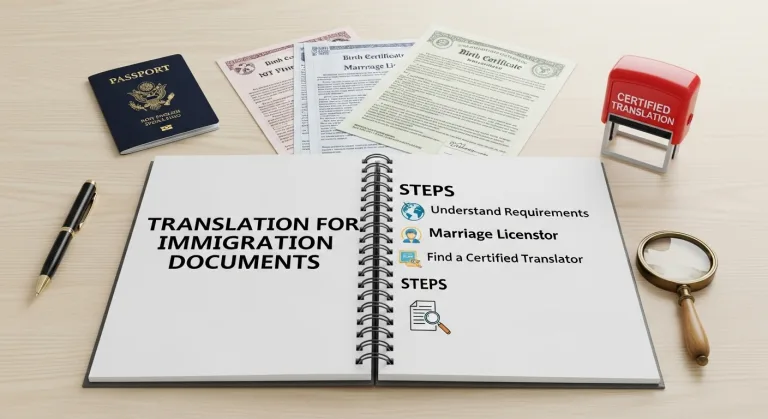

The certified translation process Riyadh can feel confusing if it’s your first time submitting documents to courts, ministries, or foreign embassies. Missing one step, using the wrong copy, or working with a non-recognized office can cause costly delays. This guide walks you through the exact, step-by-step translation workflow many clients follow at C-KAT Translations and Interpretations from your first document scan to secure translation delivery.
For a broader overview of document types, pricing ranges, and legal requirements in Saudi Arabia, make sure you also read the main pillar guide: Complete overview: “Certified Translation Riyadh: The Complete Guide to Legally Accepted Documents, Costs, and Processes.”
Why the Certified Translation Process Riyadh Matters
In Riyadh, certified translations are typically required for:
- Residency and immigration applications
- University and scholarship submissions
- Court cases and legal contracts
- Company formation and commercial registration
- Ministry of Foreign Affairs (MOFA) and other government procedures
A structured, compliant certified translation process Riyadh is essential because:
- Authorities expect translations from offices recognized in Saudi Arabia.
- Any missing stamp, wrong spelling, or formatting error can lead to outright rejection.
- There are often tight timelines for court hearings, visa appointments, and tenders.
C-KAT Translations and Interpretations follows a documented translation workflow in Riyadh that is designed to meet legal standards while staying practical and transparent for clients. Below is the typical journey your documents take from the moment you scan them to the moment you receive your certified translation.
Step 1: Document Intake Process From Inquiry to File Submission

1.1 Initial Inquiry and Scope Definition
The document intake process usually starts with a simple question: “What exactly do you need this translation for?” The intended use determines the level of formality, formatting, and certification required. When you contact C-KAT (via phone, WhatsApp, email, or visit our Riyadh office), our coordinators will ask:
- What type of document do you have (e.g., birth certificate, commercial contract, academic transcript)?
- Which language is the document in, and which language do you need?
- Where will you submit it (Saudi court, foreign embassy, university, ministry, etc.)?
- Do you already have attestations (notary, MOFA, embassy) on the original?
- What is your deadline or appointment date?
Clarity at this stage allows us to design the correct step by step translation Riyadh process for your specific case.
1.2 Scan Requirements in Riyadh
High-quality scans are a critical part of the certified translation process Riyadh. Poor scans can lead to misreading names, numbers, or dates. To avoid this, we recommend the following scan requirements in Riyadh for most authorities and for C-KAT’s internal workflow:
- Resolution: Minimum 300 dpi for official documents; 600 dpi is ideal for older or faint originals.
- Color: Color scans are preferred, especially when documents include seals, stamps, or handwritten notes.
- File format: PDF is best; high quality JPEG or PNG is acceptable if pages are clear and not compressed.
- Full page: Ensure that no corners, edges, or lines of text are cut off.
- Multiple pages: Scan multi-page documents in order; if possible, combine them into a single PDF.
If you are unsure your scan meets the standards required by Riyadh authorities, C-KAT’s team can review a sample and advise you before proceeding.
1.3 When the Original Document Is Required
For many processes, a scanned copy is enough for translation. However, some situations in Riyadh may require us to view the original:
- Documents with embossed or raised seals that are not visible in scans
- Very old or damaged documents that are difficult to read
- Cases where a government entity insists the translator confirms the original
In those cases, you can visit our Riyadh office so that C-KAT linguists can check the physical document before finalizing the translation.
Step 2: Assessment, Quotation, and Timeline
2.1 Word Count and Complexity Evaluation
Once we receive your files, the C-KAT project team analyzes:
- Number of pages and approximate word count
- Document type (legal, medical, academic, technical, financial, etc.)
- Language pair (e.g., Arabic to English, English to Arabic, French to Arabic)
- Formatting complexity (tables, seals, diagrams, letterheads, etc.)
This assessment guides us in creating a fair and transparent quotation and realistic delivery timeline.
2.2 Written Quotation and Scope Confirmation
After assessment, we provide a written quotation that outlines:
- Service type (certified translation, sworn translation if applicable, plus any attestation)
- Per-page or per-word pricing as relevant
- Estimated turnaround time
- Additional services: notarization, MOFA attestation, embassy legalization, etc. (if requested)
We only begin the translation workflow after you confirm the quote and scope. This ensures cost transparency and avoids surprises later.
2.3 Prioritizing Urgent Cases in Riyadh
Riyadh clients often face tight deadlines: court sessions, visa interviews, contract signings. When you indicate urgency, C-KAT will:
- Propose express delivery options for certified translation when feasible
- Adjust team allocation to meet the agreed deadline
- Explain any limitations clearly (for example, when external embassy or MOFA appointments are involved)
Step 3: Translator Assignment and Terminology Preparation

3.1 Matching Subject-Matter Expertise
For legally accepted translations in Riyadh, accuracy goes beyond language. The translator must understand the terminology and context of your document. C-KAT assigns translators based on:
- Native or near-native proficiency in both source and target languages
- Experience with the relevant domain (legal, academic, medical, financial, technical, etc.)
- Familiarity with Saudi regulations and terminology where needed
This step is central to a professional translation workflow in Riyadh and reduces the risk of misunderstandings by authorities or foreign institutions.
3.2 Terminology Lists and Client References
For corporate and government clients, or repeated assignments, we encourage sharing:
- Preferred translations of company names, project titles, or product names
- Past approved translations or glossaries
- Brand style guides (if available)
C-KAT’s team then prepares a brief terminology guide before starting, so that the step by step translation in Riyadh stays consistent across all your documents.
Step 4: Actual Translation From Source Text to Draft
4.1 Faithfulness to the Original Document
In certified translation, the translator must remain faithful to the structure and content of the source. At C-KAT, we follow a strict principle:
- No additions, deletions, or interpretations beyond what the text states
- Clear marking of any illegible sections (e.g., “[illegible]”)
- Replicating tables, headings, and numbers exactly as in the original
This is important because Saudi courts, ministries, and foreign embassies expect the translation to mirror the original document.
4.2 Handling Names, Dates, and Numbers
Part of the certified translation process Riyadh is the correct conversion or transliteration of personal data:
- Names: We check spellings against passports or official IDs when available.
- Dates: We indicate Hijri/Gregorian systems correctly and avoid changing the underlying date.
- Numbers: We maintain exact figures, especially in contracts, invoices, and financial reports.
Any uncertainty is flagged and clarified with you before finalizing the translation draft.
4.3 Practical Example: Simple vs. Complex Documents
To show how this phase looks in practice, here is a simplified comparison:
| Document Type | Example | Translation Focus |
|---|---|---|
| Simple Personal Document | Birth certificate (Arabic → English) | Names, dates, place of birth, parent names, official stamps |
| Complex Legal Document | Shareholders agreement (English → Arabic) | Legal clauses, obligations, rights, detailed appendices, precise terminology |
Both documents go through the same step by step certified translation process Riyadh workflow, but the complexity and review intensity differ.
Step 5: Translation QA Process in Riyadh: Review, Proofreading, and Compliance

5.1 Bilingual Review by a Second Linguist
A robust QA certified translation process Riyadh is what distinguishes professional certified translation from informal or automated translations. At C-KAT, a senior linguist or reviser will:
- Compare translation line by line with the original
- Verify names, numbers, dates, and official references (laws, decrees, etc.)
- Check grammar, spelling, and clarity in the target language
This second review is mandatory before any certified translation is stamped and delivered.
5.2 Formatting and Layout Check
Authorities in Riyadh often prefer translations that visually correspond to the original layout. Our QA team checks:
- That page breaks follow the original where possible
- That tables, lists, and section numbers match
- That seals and stamps are clearly described (e.g., “[Round blue stamp: Ministry of Education]”)
Clean formatting helps reviewers quickly compare both versions during official procedures.
5.3 Final Compliance Check for Riyadh Authorities
Before moving to certification and stamping, we perform a last compliance check that answers:
- Does the translation include all pages of the original?
- Are any attachments or annexes translated or clearly referenced?
- Is the translator’s certification wording adequate for the intended authority?
These details reduce the risk of rejection when you present your documents to courts, notaries, ministries, or foreign missions in Riyadh.
Step 6: Certification and Stamping in Riyadh
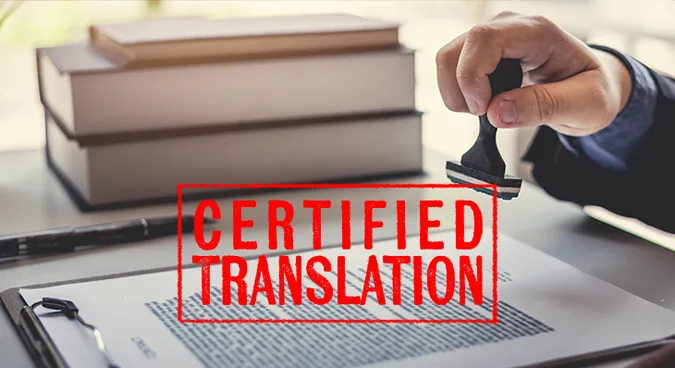
6.1 What “Certified Translation” Means Locally
In Saudi Arabia, including Riyadh, a “certified translation” typically involves:
- Translation completed by a recognized translation office or licensed translator
- Official stamp and signature of the translation office or translator
- Certification statement attesting that the translation is accurate and complete
C-KAT Translations and Interpretations is officially recognized as a certified translation process Riyadh office and provides translations accepted by many Saudi government entities, courts, and international institutions (subject to each entity’s specific rules).
6.2 C-KAT’s Certification and Stamping Workflow
Once the translation passes QA, we proceed to certification and stamping in Riyadh as follows:
- Print the final, proofread translation on official letterhead (if a hard copy is required).
- Attach the translator’s signed certification statement, including name, role, date, and contact details.
- Apply C-KAT’s official stamp on each page or as required by the relevant authority.
- Optionally, attach a copy of the original behind the translation, depending on local practice.
In some complex or high stakes cases (court cases, major contracts), we may add a unique reference number for internal tracking and future verification.
6.3 Additional Attestation and Legalization (If Needed)
For some procedures, especially those involving use outside Saudi Arabia, a multi layer legalization may be required. While this goes beyond pure translation, C-KAT can often guide or assist with:
- Notary attestation for the translation
- Ministry of Justice or MOFA steps
- Embassy or consulate legalization for the destination country
These extra steps are always clarified beforehand during the quotation phase so you understand the full process and timeline.
Step 7: Delivery Options for Certified Translation in Riyadh
7.1 Electronic vs. Physical Copies
Different authorities accept different formats, so delivery options for certified translation are an important part of planning. In Riyadh, typical scenarios include:
- Electronic copy (PDF): Often acceptable for initial online submissions to universities, some ministries, or companies.
- Physical stamped copy: Commonly required by courts, notaries, certain embassies, and in-person procedures.
C-KAT normally provides a high quality PDF scan of the stamped translation, and, when needed, the original stamped hard copy for official submission.
7.2 In-Person Collection in Riyadh
If you are based in Riyadh, you can visit C-KAT’s office to collect your certified translations. This is often preferred when:
- You have very tight deadlines and need immediate pickup.
- You are handing the translation directly to a court, ministry, or embassy nearby.
- You need to clarify any additional steps or show other documents to our team.
7.3 Courier and Delivery Services
For clients elsewhere in Saudi Arabia, or when you prefer not to travel, we can arrange secure courier delivery of the stamped original. The exact options and fees depend on the destination and urgency, and are discussed during the quotation and confirmation stage.
7.4 Confidentiality and Data Protection
C-KAT treats all documents—whether personal, corporate, or governmental—with strict confidentiality. Our internal policies and secure communication channels help keep your information protected throughout the entire certified translation process Riyadh, from file transfer to final delivery.
Putting It All Together: A Typical End-to-End Workflow
The following simplified outline shows how the full translation workflow in Riyadh unfolds when you work with C-KAT:
- Inquiry: You contact C-KAT and explain your purpose and deadline.
- Document intake: You share clear scans according to scan requirements in Riyadh.
- Assessment and quote: We review the documents, confirm the document intake process, and send a quotation.
- Confirmation: You approve the quote and timeline.
- Assignment: A suitably qualified translator is assigned.
- Draft translation: Translator completes an accurate, faithful translation.
- QA review: Second linguist and QA team conduct a full translation QA process in Riyadh.
- Certification and stamping: C-KAT certifies and stamps the translation according to authority requirements.
- Delivery: You receive the translation via your preferred method PDF, in-person pickup, or courier.
- After-service support: If an authority requests a minor adjustment (for example, different spelling of a name based on a passport), we assist with corrections within our quality policy.
Best Practices to Avoid Delays in Riyadh
To make your certified translation process Riyadh as smooth as possible, keep these practical tips in mind:
- Start early: Don’t wait until the day before a visa appointment or court session to request translation.
- Check document completeness: Make sure all pages, annexes, and seals are included in your scan.
- Use one consistent spelling of names: Align all spellings across passports, IDs, and previous translations.
- Clarify the target authority: Tell the translation office exactly where the translation will be used (e.g., MOFA, specific embassy, or specific court).
- Store digital copies safely: Keep your translated files backed up in case you need them again for future procedures.
Following these simple steps reduces back and forth communication and speeds up the entire workflow.
How C-KAT Supports Individuals, Corporates, and Government Entities
While this article focuses on documents, it’s worth noting that C-KAT also supports broader language needs in Riyadh and across Saudi Arabia, including:
- Onsite and remote interpretation for meetings, seminars, and court proceedings
- Simultaneous interpretation for conferences and large events
- Interpretation equipment rental and full technical support onsite
- Ongoing translation partnerships for corporate and government departments
If you manage regular documentation or large projects, C-KAT can help you standardize your translation workflow in Riyadh, create custom glossaries, and implement consistent quality standards over time.
Frequently Asked Questions About the Certified Translation Process Riyadh
Timeframes vary depending on document length, complexity, and language pair. A simple one-page certificate can often be completed within 24 hours or less. Larger legal contracts, academic transcripts, or multi document files may require several working days. When you contact C-KAT, you’ll receive a tailored time estimate for your specific case.
Not always. In many cases, a clear, high resolution scan is sufficient for translation. However, for certain procedures or when documents are hard to read, we may need to see the original in person. If an authority in Riyadh explicitly requires the translator to view the original, we’ll inform you and arrange an office visit.
C-KAT is an officially recognized certified translation office, and our translations are widely accepted across Saudi Arabia. However, each authority or embassy may have its own rules. We always recommend confirming any special requirements (like notarization or MOFA attestation) with the receiving authority and sharing that information with us so we can tailor the process.
No. For a translation to be certified, our translators must produce or fully revise the text themselves. Machine translation output, even if edited, is not suitable for official certification. C-KAT takes legal and ethical responsibility for the accuracy and completeness of every certified translation we stamp.
C-KAT follows strict confidentiality policies. Documents are shared only with the minimal team members required for your project, and we use secure channels for file transfer whenever requested. Sensitive legal, medical, or corporate materials are handled under strict non-disclosure conditions.
Conclusion: Navigating the Certified Translation Process Riyadh with Confidence
A well-structured, transparent certified translation process Riyadh is essential for smooth dealings with courts, ministries, universities, and embassies. From correct scans and a clear document intake process to rigorous QA, certification, stamping, and practical delivery options, every step matters.
By working with an experienced provider like C-KAT Translations and Interpretations, you gain a partner who understands both linguistic accuracy and the real-world expectations of Saudi and international authorities. If you are planning a new application, case, or project that requires certified translation in Riyadh, contact C-KAT early to design the right workflow and timeline for your needs.
To complement this step-by-step guide, review the broader legal and pricing context in our main reference article: Complete overview: “Certified Translation Riyadh: The Complete Guide to Legally Accepted Documents, Costs, and Processes.“