
Riyadh has become a regional hub for investment, trade, and government projects. As your company signs contracts, participates in tenders, issues invoices, or updates corporate structures, accurate corporate document translation Riyadh is no longer optional it is a legal and commercial necessity.
This cluster guide focuses on the specific translation needs of businesses and corporates in Riyadh: articles of association, powers of attorney (POAs), invoices, tenders, commercial registrations, shareholder documents, and tax certificates. For a broader explanation of how certified translations work in Saudi Arabia – including legal validity, certification methods, and pricing models see the main guide: “Certified Translation Riyadh: The Complete Guide to Legally Accepted Documents, Costs, and Processes.”
C-KAT Translations and Interpretations supports companies, investors, and government related projects in Riyadh with compliant, confidential, and timely translations in multiple language pairs, aligned with Saudi regulatory requirements.
Why Corporate Document Translation Matters in Riyadh
In Saudi Arabia, official corporate paperwork is often required in Arabic, even if your internal or international business language is English or another language. For many procedures, translations must be produced or endorsed by a certified translation office to be accepted by ministries, courts, and banks.
Key Reasons Business Translation in Riyadh is Critical
- Regulatory compliance: Ministries such as the Ministry of Commerce (MoC), ZATCA, and other Saudi authorities typically require Arabic versions of foreign language business documents.
- Avoiding delays: Incorrect, incomplete, or non-certified translations can cause rejection of applications, delaying commercial registration, licensing, or payments.
- Risk management: Misinterpreted clauses in articles, POAs, or tenders can create legal exposure, disputes, and financial losses.
- Professional image: Clear, consistent translations across contracts, invoices, and corporate communications build trust with partners, banks, and government entities.
Working with a specialist provider of business translation Riyadh like C-KAT Translations and Interpretations helps align your documentation with Saudi legal and business practices, not just language.
Core Categories of Corporate Documents Requiring Translation in Riyadh
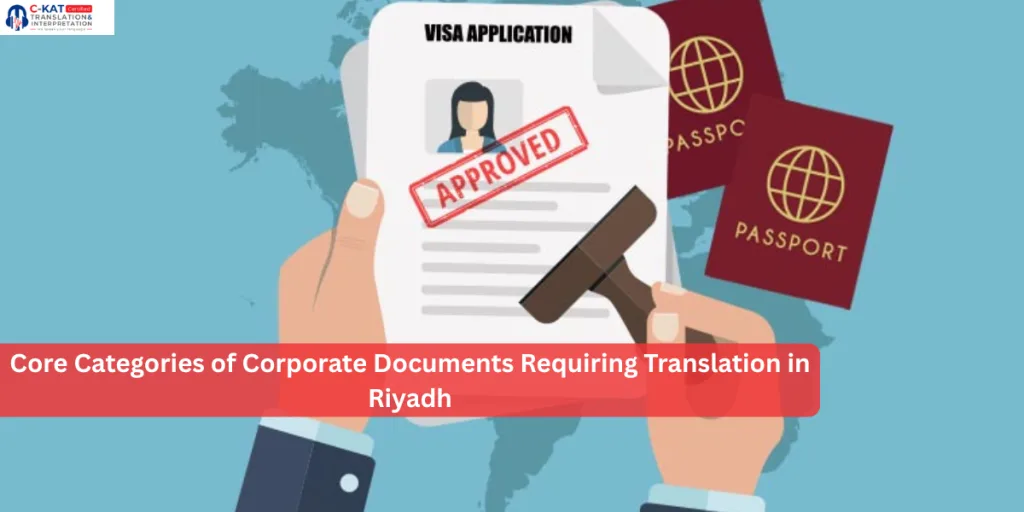
While each business is unique, most Saudi and foreign companies in Riyadh repeatedly require translation for a standard set of corporate documents. Below is an overview of the most common categories and how they are typically used.
| Document Type | Common Use in Riyadh | Typical Language Pairs | Need Certified? |
|---|---|---|---|
| Articles of Association / Shareholder Agreements | Company setup, restructuring, licensing | English–Arabic, Arabic–English | Often yes, for ministries and banks |
| Powers of Attorney (POAs) | Authorizing representatives before courts, ministries, banks | English–Arabic, Arabic–English | Almost always yes |
| Commercial Registration & Licenses | Tenders, banking, foreign partners, compliance | Arabic–English, English–Arabic | Frequently required |
| Invoices & Tax Documents | Cross-border transactions, audits, ZATCA requirements | Arabic–English, English–Arabic | Depends on use; often required in disputes/audits |
| Tender Documents & Bids | Government projects, large private contracts | Arabic–English, English–Arabic | Usually mandatory |
| Shareholder & Board Resolutions | Banking, licensing, corporate actions | Arabic–English, English–Arabic | Usually yes |
| Tax Certificates & Financial Statements | Authorities, investors, lenders | Arabic–English, English–Arabic | Often required |
C-KAT supports these and many other corporate documents with legally compliant corporate document translation Riyadh services, so your business can operate smoothly across languages.
Commercial Registration Translation Riyadh: Establishing and Proving Legal Status
Commercial registration translation Riyadh is one of the most frequent needs for both Saudi and foreign-owned companies. Your Commercial Registration (CR) certificate, licenses, and related company formation documents often need to be translated when dealing with banks, foreign partners, or foreign regulators.
1) When you Need your Commercial Registration Translated
- Opening or updating corporate bank accounts, locally or abroad.
- Participating in local or international tenders and RFPs.
- Submitting documentation to foreign authorities for branch openings or compliance checks.
- Responding to external audits or due diligence by investors, partners, or lenders.
2) Best Practices for Commercial Registration Translation
- Include all pages and annexes: Make sure the translator receives the full CR extract, including attachments and updates.
- Maintain consistency of names: Company names, shareholder names, and legal forms (LLC, CJSC, etc.) must be translated consistently across all your documents.
- Check validity dates: Many uses require up-to-date CR copies; verify that the Arabic original is current before translation.
- Use certified translators when needed: For official procedures, insist on a certified translation with seal and signature, such as those provided by C-KAT Translations and Interpretations.
Accurate CR translations are essential for smooth business translation Riyadh workflows and to avoid repeated clarifications from stakeholders abroad.
POA Translation Riyadh: Powers of Attorney for Corporate Use

Powers of Attorney (POAs) are particularly sensitive in Saudi Arabia, as they grant legal authority to act on behalf of your company. A minor translation error in a POA can unintentionally expand or restrict powers, leading to serious legal consequences.
1) Common Scenarios Requiring POA Translation in Riyadh
- Foreign shareholders granting authority to local managers or lawyers.
- Saudi companies appointing representatives to handle government portal tasks, litigation, or banking operations.
- Cross border transactions where a POA issued abroad is used in Saudi courts or ministries, or vice versa.
Professional POA translation Riyadh should consider:
- Precise legal terminology: Terms like “general authority”, “limited authority”, “irrevocable”, and “validity period” must reflect Saudi legal concepts accurately.
- Alignment with notarial language: If the POA is notarized or issued through e-notarization platforms, translation should mirror the format and required clauses.
- Names and ID details: Passport numbers, Iqama numbers, national IDs, and commercial registration details must be error free.
C-KAT Translations and Interpretations regularly handles certified POA translation Riyadh for corporate clients, law firms, and advisors, ensuring that every word aligns with the authority actually granted in Arabic or English.
Invoice and Tax Related Translation Riyadh: Invoices, Credit Notes, and Tax Certificates
With the expansion of VAT and increasing scrutiny from ZATCA, accurate financial and invoice translation Riyadh is more important than ever. Translation affects not just understanding but also taxation, audits, and dispute resolution.
Key Financial Documents that Often Require Translation
- Commercial invoices and pro forma invoices for imports and exports.
- Credit and debit notes.
- Purchase orders and delivery notes.
- Tax certificate translation Riyadh: ZATCA registration certificates, tax clearance certificates, and VAT related documentation.
- Audited financial statements and management accounts.
Why invoice and tax document translation matters
- Customs and logistics: Misinterpreted product descriptions or HS codes on invoices can delay shipments or increase customs queries.
- VAT and ZATCA compliance: Amounts, tax rates, and descriptions must be accurately reflected in both Arabic and English, especially in audits or disputes.
- Internal controls: Multinational companies often require English versions of Arabic invoices for consolidation, reporting, and internal audit.
A specialist in business translation Riyadh will ensure unit prices, totals, and tax amounts are accurately rendered in the target language, including correct use of decimal separators, currency codes, and tax terminology.
Tender Translation Riyadh: Winning Public and Private Contracts
Saudi Arabia’s Vision 2030 projects, mega-developments, and large private sector initiatives have created a strong pipeline of tenders and RFPs. For many companies, tender translation Riyadh is the key step that stands between a missed opportunity and a winning bid.
Two Sided Tender Translation Needs
- From Arabic to English (or other languages): To help foreign partners, head offices, or international consultants understand tender conditions, technical specifications, and contract terms.
- From English to Arabic: To submit compliant bids, technical proposals, and commercial offers to Saudi government agencies and private project owners.
Risks of Poor Tender Translation
- Misinterpreting evaluation criteria or submission requirements, leading to disqualification.
- Inaccurate technical descriptions that under or over promise capabilities.
- Ambiguous price breakdowns or payment terms that cause later disputes.
Professional tender translation Riyadh involves not only linguistic accuracy but also a solid understanding of procurement language, common FIDIC style clauses, and sector specific terminology (construction, IT, healthcare, energy, etc.). C-KAT Translations and Interpretations frequently supports bid teams and consultants with fast, coordinated tender translations, including tight deadlines near submission dates.
Shareholder and Governance Document Translation: Articles, Resolutions, and More
Corporate governance and ownership structures are heavily documented in Saudi Arabia. Accurate shareholder document translation Riyadh is essential to reflect who owns the company, how decisions are made, and which rights each party holds.
Key Governance Documents that Often Need Translation
- Articles of Association and Bylaws: Core corporate charter documents for incorporation, restructuring, or registration abroad.
- Shareholder agreements: Separate agreements covering voting rights, profit distribution, exit terms, and special rights.
- Board and shareholder resolutions: Approvals for new branches, bank accounts, borrowing, or major contracts.
- Capital increase/decrease documentation and share transfer agreements.
When handling corporate document translation Riyadh for governance materials, C-KAT focuses on:
- Terminology consistency: Using the same Arabic terms for specific classes of shares, rights, and corporate bodies across all documents.
- Legal style: Maintaining the formal, structured nature of corporate clauses so they can be relied upon by regulators, banks, and courts.
- Change tracking: Clearly reflecting amended articles or resolutions and their effective dates.
Process: How Corporate Document Translation Works with C-KAT in Riyadh
Whether you have a single POA or a full tender package, a clear process makes translation faster, more secure, and easier to manage. Below is a typical workflow that C-KAT Translations and Interpretations follows for corporate clients in Riyadh.
Step-by-Step Corporate Translation Process
- Document Assessment and Quotation
- You share scanned copies or editable files (Word, Excel, PowerPoint, PDF) via secure channels.
- C-KAT reviews length, complexity, required certification, and deadlines.
- You receive a clear quotation and timeframe, including options for urgent delivery if needed.
- Terminology Alignment and Brief
- For ongoing corporate accounts, C-KAT helps build a terminology list (company names, product names, internal terms).
- You confirm any preferred translations for key terms (e.g., legal forms, job titles, department names).
- Translation by Specialized Linguists
- Documents are assigned to translators experienced in legal, financial, or technical content, as appropriate.
- For large tenders or packages, a coordinated team is used under a lead linguist to ensure consistency.
- Revision, Quality Checks, and Formatting
- A second linguist or reviewer checks accuracy, terminology, and formatting alignment with originals.
- Page layout, numbering, tables, and annexes are mirrored where possible.
- Certification and Delivery
- Where required, C-KAT issues a certified translation with stamp and signature, accepted by authorities in Saudi Arabia.
- Soft copies are delivered securely; hard copies are prepared for submission to ministries, courts, or banks.
- Ongoing Support
- C-KAT keeps terminology references for future projects, helping maintain consistency across your growing document set.
- Support is available for clarifications or small updates (e.g., date changes, annex additions).
How to Choose a Corporate Translation Partner in Riyadh
Not all translation providers are equipped to handle complex, high stakes corporate material. When selecting a partner for ongoing corporate document translation Riyadh, consider the following criteria:
Key Selection Criteria
- Certification and legal recognition: Confirm the office is officially recognized in Saudi Arabia for certified translations accepted by ministries, courts, and banks.
- Experience with corporate and legal content: Check whether they regularly handle contracts, CRs, POAs, tenders, and financial documents.
- Confidentiality measures: Ask about data protection, NDAs, secure file sharing, and internal access controls.
- Capacity and responsiveness: For tenders and large transactions, you need a team that can scale and respond quickly to urgent requests.
- Language coverage: Consider your current and future language needs (e.g., Arabic to English, Arabic to French, Arabic to Chinese) for investors or partners.
- Complementary services: Interpretation for board meetings, negotiations, or conferences can be a key value-add.
C-KAT Translations and Interpretations combines certified translation capabilities with professional interpretation services and on-site technical support, which is particularly useful when you host investor days, negotiations, or seminars in Riyadh.
Common Challenges in Corporate Translation And How to Avoid Them
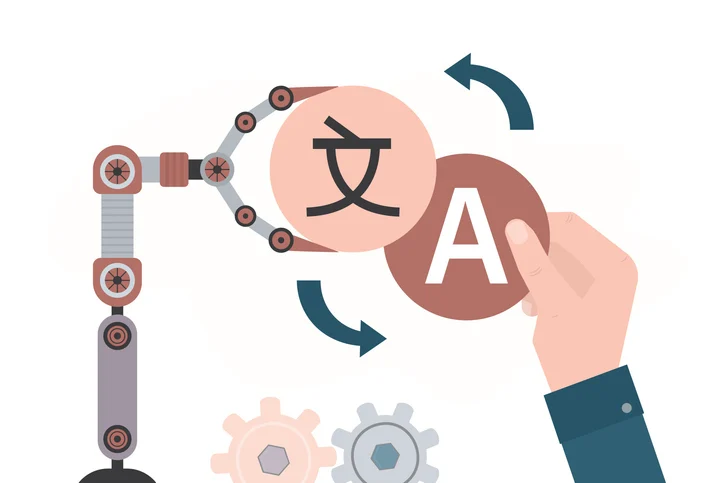
Even experienced companies can face issues when translating corporate and business documents. Being aware of these challenges helps you prevent costly mistakes.
1. Inconsistent Naming and Terminology
Company names, project titles, and legal terms translated differently across documents can create confusion with regulators and partners. Maintain a centralized glossary with your translation provider to avoid this.
2. Using Non Certified Translations Where Certification is Required
For some authority submissions, a simple bilingual draft is not enough. Always verify whether the ministry, court, or bank explicitly requires a certified translation, and ensure your provider can meet that requirement.
3. Last Minute Translation of Large Tender or Contract Packages
Rushing complex documents such as tenders or multi-party agreements increases the risk of errors. Involve your translation partner early so that they can allocate resources and build familiarity with the project.
4. Ignoring Formatting and Annexes
Missing attachments, poorly aligned tables, or misnumbered clauses can cause confusion or rejection in formal processes. A professional corporate translation should mirror the structure and references of the original document.
FAQ: Corporate Document Translation Riyadh
Certified translation is typically mandatory when documents are submitted to Saudi ministries, courts, notaries, or banks, especially for CRs, POAs, articles of association, resolutions, and court-related documents. For marketing or internal use, non-certified translations may be sufficient. When in doubt, ask the receiving authority or consult your legal advisor.
Timeframes depend on length and complexity. A standard POA or CR may be delivered within 1 working day, while a full set of tender documents or extensive shareholder agreements may require several days or more. C-KAT offers urgent options for time-sensitive projects and will provide clear timelines during quotation.
Machine translation can sometimes help with rough understanding, but for any document that may be used in audits, disputes, or external reporting, professional human translation is strongly recommended. Financial figures, tax references, and legal wording are too sensitive for unreviewed automated tools.
Yes. Many corporate clients in Riyadh require Arabic to English as well as other language pairs for head offices or partners in Europe, Asia, and North America. C-KAT Translations and Interpretations can coordinate multilingual projects while maintaining centralized terminology.
Serious corporate translation providers, including C-KAT, use NDAs, controlled access to files, secure transfer channels, and internal confidentiality policies. For high profile or pre announcement transactions, you can also request additional security measures and dedicated teams.
Conclusion: Secure, Compliant Corporate Document Translation Riyadh
From commercial registration extracts and shareholder resolutions to powers of attorney, invoices, and tenders, reliable corporate document translation Riyadh underpins nearly every strategic move your company makes. Accurate, legally accepted translations help you comply with Saudi regulations, communicate clearly with foreign stakeholders, and protect your business in negotiations and disputes.
C-KAT Translations and Interpretations supports corporates, investors, and government-related entities in Riyadh with certified business translation, interpretation, and onsite technical services. Whether you are preparing a complex tender, updating governance documents, or responding to an audit, our team can help you navigate requirements efficiently and securely.
To understand the broader legal framework, certification methods, and pricing structures that apply to your corporate translations, explore the main guide here: Complete overview: “Certified Translation Riyadh: The Complete Guide to Legally Accepted Documents, Costs, and Processes.”
For tailored advice or a project quote, you can consult C-KAT in Riyadh and build a long-term language partnership that grows with your business.