

Understanding certified translation Riyadh requirements is essential if you want your documents to be legally accepted by courts, ministries, embassies, and universities in the Saudi capital. A translation that looks professional but does not meet local acceptance rules can delay your application, cause rejection, or force you to redo the entire process.
This cluster guide focuses on the specific rules, timelines, and practical tips you need to follow in Riyadh. It complements the broader overview provided in the main guide, “Certified Translation Riyadh: The Complete Guide to Legally Accepted Documents, Costs, and Processes.”
Drawing on the experience of C-KAT Translations and Interpretations as a Saudi-based certified translation office serving individuals, corporates, and government entities, this article explains how to comply with Riyadh translation acceptance rules, what different authorities expect, and how to avoid the most common reasons for rejection.
1. Why Certified Translation Requirements in Riyadh Are So Strict
Riyadh is home to key Saudi ministries, regulatory bodies, and major courts. Because these authorities rely on translated documents to make legal, financial, and immigration decisions, they enforce strict certified translation Riyadh requirements to protect accuracy, authenticity, and national security.
In practice, this means that the type of translation provider, the format of your documents, and the content of the translator’s declaration are all checked carefully before a document is accepted. Even minor issues—such as missing stamps or inconsistent names can lead to delays.
Working with a recognized office like C-KAT Translations and Interpretations, which understands local procedures and expectations, significantly reduces the risk that your paperwork will be refused at a ministry counter, embassy window, or court registry in Riyadh.
2. Core Certified Translation Riyadh Requirements: What Authorities Look For

While details can differ by authority, most government offices and courts in Riyadh look for the following core elements before they accept a translated document.
2.1 Use of a Recognized, Licensed Translation Office
For most legal and official purposes, translations must be done or endorsed by a licensed, certified translation office operating under Saudi regulations. In Riyadh, adhoc translations by unlicensed freelancers are frequently rejected, even if linguistically correct.
- The office should be officially registered in Saudi Arabia.
- Its stamp and commercial registration data should appear on the translated document.
- The translator’s name and/or internal reference should be traceable.
C-KAT Translations and Interpretations meets these criteria and is recognized for providing legally accepted translations across Saudi Arabia, including Riyadh.
2.2 Clear Translator’s Declaration
A standard requirement is a formal declaration (often printed at the end of the translation) confirming that:
- The translation is a complete and accurate representation of the original document.
- The translation has been carried out by a qualified translator or certified translation office.
- The language pair (e.g., Arabic to English) is clearly specified.
2.3 Stamps, Signatures, and Contact Details
Riyadh translation acceptance rules emphasize traceability. Authorities usually expect:
- Official stamp of the translation office on each page or at least across all pages.
- Authorized signature of the translator or office representative.
- Office contact information (address, phone, email) printed on the letterhead.
2.4 Consistency with Original Names and Dates
Names, dates, and numbers must match the original document exactly, following accepted transliteration practices. Inconsistent spelling of a person’s name across documents is one of the top causes of queries from Riyadh authorities.
- Names must be transliterated consistently across passports, IDs, and certificates.
- Hijri/Gregorian dates may need clear conversion or dual indication when required by the requesting body.
- All seals, watermarks, and annotations should be noted in the translation when relevant.
2.5 Adherence to Official Document Formatting in Riyadh
Layout matters. Official document formatting Riyadh standards usually require that:
- The translation mirrors the structure of the source document (sections, headings, numbers).
- Tables, certificates, and multi page contracts are clearly labeled with page numbers.
- Any missing or illegible parts of the original are explicitly marked (e.g., “illegible text” or “not provided”).
3. Authority Specific Rules: Courts, Embassies, Ministries, and Universities
Not all authorities apply identical rules. Below is a breakdown of typical expectations by destination in Riyadh, with emphasis on Riyadh translation acceptance rules for each.
3.1 Court Submission Rules in Riyadh
For court filings (claims, contracts, judgments, POAs, and evidence), certified translations must meet court submission rules Riyadh, which commonly include:
- Translation into Arabic, as it is the working language of Saudi courts.
- Use of precise legal terminology consistent with Saudi legal language.
- Submission of both the original language document and its certified Arabic translation.
- Clear reference numbers and party names matching all attached documents.
Courts often rely on the Ministry of Justice (MOJ) to set standards. That is why working with a provider like C-KAT Translations and Interpretations, familiar with MOJ expectations Riyadh, is particularly important for litigation related documents.
3.2 MOJ Expectations in Riyadh for Notarization and Attestation
The MOJ expectations Riyadh typically include:
- Arabic translations for all documents to be notarized or attached to deeds and POAs.
- Certified translation by an office recognized in Saudi Arabia, with a clear stamp.
- Consistency between the translation and any data previously recorded in government systems (names, ID numbers, commercial registration numbers).
In some cases, the MOJ may request that foreign documents be legalized by the relevant Saudi embassy and Ministry of Foreign Affairs (MOFA) before they accept the translation as supporting evidence.
3.3 Embassy Requirements in Riyadh
Embassy requirements Riyadh vary widely depending on the country and the purpose (visa, family reunification, study, work permit, etc.). However, several common patterns exist:
- Language direction: For Schengen or North American embassies, translations are often required into English or the embassy’s national language. Conversely, some embassies ask for Arabic translations to be used before Saudi authorities.
- Attestation chain: Many embassies require that the original document be attested by the issuing country’s authorities, then legalized by MOFA in Saudi Arabia, and only then translated.
- Formatting and stamps: Embassies usually insist on an official letterhead, signature, and stamp from a certified office such as C-KAT.
Because requirements change, it is wise to verify the latest instructions on the embassy’s website and then share them with your translation provider for alignment.
3.4 Ministries and Government Agencies in Riyadh
Ministries (such as Human Resources and Social Development, Commerce, Interior, Education, and Health) have their own document policies, but most:
- Accept translations from Saudi-licensed certified offices.
- Require Arabic translations for inclusion in their systems.
- May require electronically or manually attested documents, depending on the process.
3.5 Universities and Educational Institutions in Riyadh
Universities typically ask for certified translations of diplomas, transcripts, letters of experience, and recommendation letters when they are not in Arabic. Common expectations include:
- Clear translation of grades, course names, and academic terminology.
- Certified translation timelines Riyadh that align with admission or scholarship deadlines.
- Sometimes, equivalency assessments by relevant education authorities in addition to translation.
4. Certified Translation Timelines in Riyadh: What to Expect

Planning your schedule is crucial, especially when you are working with visa appointments, court hearings, or ministry deadlines. Certified translation timelines Riyadh depend on multiple factors, including document type, language pair, and attestation steps.
4.1 Typical Timeframes by Document Type
| Document Type | Typical Page Count | Standard Timeline (Business Days) | Express Options (If Available) |
|---|---|---|---|
| Personal documents (passports, IDs, birth/marriage certificates) | 1–3 pages | 1–2 days | Same day or next day |
| Academic certificates & transcripts | 2–10 pages | 2–4 days | 1–2 days depending on language |
| Corporate documents (CR, Articles, contracts) | 10–50+ pages | 3–7 days | By agreement, often staged delivery |
| Court documents & judgments | Varies | 2–7 days | Emergency support case-by-case |
These are indicative only. At C-KAT Translations and Interpretations, timelines are confirmed in writing after reviewing your documents and requirements.
4.2 Factors That Can Extend Timelines
- Rare language pairs: Less common combinations may require additional scheduling.
- Heavy legal complexity: Technical contracts or court bundles need careful review to align with MOJ expectations Riyadh.
- Attestation and legalization: If your documents need MOFA or embassy attestation before or after translation, you must add several days or weeks.
- Peak seasons: University admission periods, fiscal year-end, and Hajj/Umrah seasons can impact workloads in Riyadh.
4.3 Tips to Meet Deadlines in Riyadh
- Share clear scans or originals early and in full.
- Inform your translation provider of any official submission date and authority (court, embassy, ministry).
- Ask whether partial deliveries (e.g., priority documents first) are possible.
- Book interpretation services for hearings or meetings in advance if needed.
5. Practical Certified Translation Tips for Riyadh Applicants
The following certified translation tips Riyadh are based on common challenges seen in everyday practice at C-KAT Translations and Interpretations.
5.1 Always Confirm the End User’s Requirements
Before you translate, ask the authority requesting your documents:
- Which language(s) are accepted?
- Do they require a specific format (original + copy, paper vs. electronic)?
- Must the document be attested or legalized before translation?
- Do they have any approved translators or jurisdiction-specific conditions?
5.2 Provide Complete and Legible Documents
Poor-quality scans or photos can lead to errors or missing details. Send:
- High resolution scans of all pages, including back sides if they contain stamps.
- Full documents, not cropped screenshots.
- Any previous translations or transliteration references for names, if consistency is required.
5.3 Align Name Spellings Across All Documents
When translating between Arabic and English, names can be spelled in different ways (e.g., Mohammed vs. Mohamed). Choose the spelling used in your passport or primary ID and request that your translation office keep it consistent, especially if your documents will go to courts or embassies.
5.4 Request Bilingual Layouts When Helpful
Some authorities appreciate bilingual formatting Arabic and English side by side especially for contracts and corporate documents. While not mandatory everywhere, this can:
- Facilitate understanding by both Arabic speaking and foreign stakeholders.
- Reduce misinterpretation during negotiations or legal review.
5.5 Keep Digital and Hard Copies Organized
For smooth submissions:
- Maintain clearly labeled digital folders (e.g., “Original Arabic,” “Certified English Translation,” “MOFA Attested”).
- Keep physical sets of originals and certified translations clipped or bound in the order required by the authority.
6. Understanding Official Document Formatting in Riyadh
Because official document formatting Riyadh standards affect acceptance, your translation layout should look official and consistent.
6.1 Recommended Layout Elements
- Header: Translation office logo, name, and contact details.
- Body: Clear paragraphs mirroring the original structure, numbered articles, and descriptive notes for stamps or signatures.
- Footer: Page numbers, total pages (e.g., “Page 1 of 3”), and sometimes file or reference number.
6.2 Handling Stamps, Seals, and Handwritten Notes
Official documents often contain stamps and handwritten annotations. These should not be ignored:
- Stamps are generally rendered as “Stamp: Ministry of …” followed by the translated text if legible.
- Handwritten notes are indicated as “[Handwritten]” with the translation.
- Illegible text is mentioned as such to maintain transparency.
6.3 Electronic vs. Paper Formatting
Many Riyadh authorities now accept electronic copies, but for legal and embassy processes, paper originals with wet signatures and physical stamps remain the standard. C-KAT Translations and Interpretations can provide both digital PDFs and hard copies aligned with these expectations.
7. How C-KAT Translations and Interpretations Supports Compliance in Riyadh
As a Saudi based, officially recognized translation and language services company, C-KAT Translations and Interpretations is structured to meet certified translation Riyadh requirements for a wide range of clients.
7.1 Services Tailored to Riyadh Authorities
- Certified translation for courts, embassies, ministries, universities, and corporate compliance.
- Document attestation support (coordination with MOFA and other bodies where applicable).
- Specialized legal, commercial, technical, and academic translation.
7.2 Support for Events, Hearings, and Meetings
Beyond written translation, C-KAT provides professional interpretation services in Riyadh for:
- Court hearings and legal consultations.
- Corporate meetings and negotiations.
- Conferences, seminars, and official events, including simultaneous interpretation equipment rental and on-site technical support.
7.3 Quality and Confidentiality
Legal and corporate documents often contain sensitive information. C-KAT operates with strict confidentiality protocols and quality checks, ensuring that translations not only comply with Riyadh translation acceptance rules but also protect your personal and business data.
8. Step-by-Step: From Document to Accepted Certified Translation in Riyadh
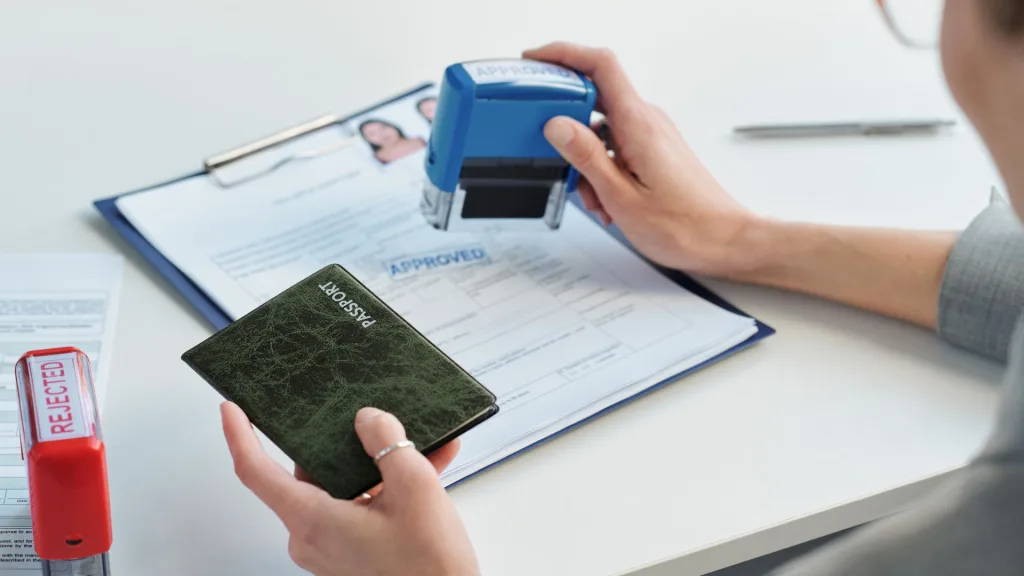
To tie everything together, here is a practical, high level process you can follow when working with a certified office in Riyadh.
- Clarify destination requirements: Identify which authority will receive the document (court, embassy, ministry) and in which language it must be submitted.
- Prepare and attest originals if required: Obtain any needed attestations from your home country, Saudi MOFA, or other bodies before translation if specified.
- Contact a certified office: Share your documents with C-KAT or another recognized provider, explaining the purpose and deadline.
- Receive quotation and timeline: Confirm the number of pages, price, and delivery schedule, including any express options.
- Translation and internal review: The office translates and proofreads the document, checking terminology and consistency with MOJ expectations Riyadh when relevant.
- Formatting and certification: The translation is formatted on official letterhead, stamped, signed, and accompanied by a translator’s declaration.
- Delivery and verification: You receive electronic and/or hard copies. Verify that names, dates, and reference numbers match your originals.
- Submission to authority: Submit your original and certified translation together, following the authority’s instructions (online portal, inperson appointment, or courier).
9. FAQ: Certified Translation Riyadh Requirements
Not always. Courts and most government ministries require Arabic as the official language, so translations for those purposes will almost always be into Arabic. However, some embassies, foreign universities, and international organizations based in Riyadh may require English or another foreign language instead. Always confirm with the requesting body.
It depends. Some authorities in Riyadh accept foreign certified translations if they are done by a recognized translator and properly legalized. Others insist on translation by a Saudi-licensed office. To avoid rejection, many applicants choose to retranslate or certify translations locally through an office like C-KAT Translations and Interpretations.
For the translation process itself, high-quality scans are usually sufficient, and many clients in Riyadh work this way. However, when you submit your documents, the authority may require original physical documents alongside your certified translation. Always keep your originals safe and ready for inspection.
If a mistake is discovered by you, the translation office, or the authority the translation should be corrected and reissued with updated stamps and signatures. Reputable offices like C-KAT respond quickly to such issues, as accuracy is central to Riyadh translation acceptance rules.
As a rule of thumb, start at least one to two weeks before any non-movable deadline such as a visa appointment or court hearing. This buffer allows time for translation, internal review, printing, attestation (if needed), and any unforeseen corrections.
Conclusion: Navigating Certified Translation Riyadh Requirements with Confidence
Meeting certified translation Riyadh requirements is not just about language accuracy it is about aligning with the specific rules, formats, and expectations of courts, ministries, embassies, and universities in the Saudi capital. When you understand Riyadh translation acceptance rules, certified translation timelines Riyadh, and official document formatting Riyadh standards, you significantly reduce the risk of delays or rejections.
By partnering with a locally recognized provider like C-KAT Translations and Interpretations, you benefit from deep knowledge of MOJ expectations Riyadh, embassy requirements, and court submission rules Riyadh, as well as professional interpretation and technical support for hearings and events.
To explore the broader landscape of legally accepted translations, pricing, and process planning, refer to the main guide: Complete overview: “Certified Translation Riyadh: The Complete Guide to Legally Accepted Documents, Costs, and Processes.” When you are ready to proceed with your own documents, contact C-KAT Translations and Interpretations to receive a compliant, timely, and confidential certified translation tailored to Riyadh’s requirements.